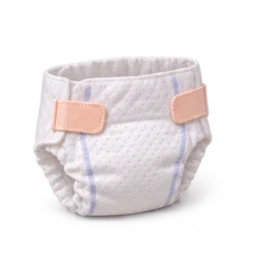
Nappies
How many wet nappies should a newborn have?
How many wet and dirty nappies a newborn should have from day 4 and day 5, according to the NHS, plus an easy way to count them and what to tell your midwife.
Short answer
The NHS says that from day 5 onwards, a breastfed baby should have at least 6 heavy, wet nappies every 24 hours. From day 4 and for the first few weeks, they should also do at least 2 soft, yellow poos every day. If you’re unsure whether your baby is getting enough, talk to your midwife or health visitor.
In the first weeks with a newborn, nappies are one of the few things you can actually count. They’re also one of the first things your midwife or health visitor will ask about when checking how feeding is going. Here’s what the NHS says, and a simple way to keep count when the days and nights start to blur.
How many wet nappies should a newborn have?
The NHS gives a clear number for breastfed babies once they’re a few days old:
From day 5 onwards, a breastfed baby's wet nappies should become more frequent, with at least 6 heavy, wet nappies every 24 hours.
Two words matter here: heavy and 24 hours. It’s the number of properly wet nappies across a full day and night that counts, not just since breakfast. If you’re not sure what counts as heavy, ask your midwife to show you. It’s one of the most common questions they hear.
How many dirty nappies should a newborn have?
Poos are the other half of the picture. For breastfed babies, the NHS says:
From day 4 and for the first few weeks, a breastfed baby should do at least 2 soft, yellow poos every day.
Put together, the NHS guidance for a breastfed baby looks like this:
- From day 4, and for the first few weeks: at least 2 soft, yellow poos every day.
- From day 5 onwards: wet nappies become more frequent, with at least 6 heavy, wet nappies every 24 hours.
What about the first few days?
The NHS numbers above start on day 4 for poos and day 5 for wet nappies. Before that, your midwife will tell you what to expect and check how feeding is going. The most useful thing you can do is write down what you see, so you can answer their questions with facts rather than guesses.
Why do midwives ask about wet and dirty nappies?
The NHS includes wet and dirty nappies on its page about whether a breastfed baby is getting enough milk. That’s why they come up at almost every early visit. It’s much easier to answer from a log than from memory after a night of broken sleep.
Things you may be asked, and that are worth noting down:
- How many wet nappies in the last 24 hours, and whether they were heavy.
- How many dirty nappies, and the colour and texture you saw.
- When the last wet nappy was.
- How often your baby is feeding (see how often a newborn should feed).
- Anything that worried you, in your own words.
How many nappy changes a day?
Counting wet and dirty nappies isn’t the same as counting changes. Babies get through a lot of nappies, which is useful to know when you’re stocking up:
Young babies may need changing as many as 10 or 12 times a day, while older babies need to be changed around 6 to 8 times.
Frequent changes are kind to skin, too. To help prevent nappy rash, the NHS advises changing wet or dirty nappies as soon as possible and leaving the nappy off for a while when you can.
Nappies, yellow skin and when to get help
While you’re looking closely at nappies, you may also notice your baby’s skin or eyes looking yellow. The NHS says:
Jaundice in babies is common and usually harmless. If your baby is over 24 hours old and you think they have jaundice, the NHS advises an urgent GP or midwife appointment or calling 111.
If you’re ever worried about your baby, trust your instincts and contact your midwife, GP or NHS 111. The NHS lists no pee in the past 12 hours among the signs to call 999 (or your local emergency number). Our guide to a baby’s high temperature lists the other urgent signs.
How to keep track of wet and dirty nappies
You don’t need a spreadsheet. A simple tally works, as long as everyone who changes the baby adds to the same one.
- Log each change as it happens: wet, dirty or both. Waiting until later is how changes get forgotten.
- Look back over 24 hours, not since midnight. That matches the way the NHS guidance is written.
- Add a short note if something looks different, so you can describe it accurately later.
- Share one log with whoever does the night changes, so the 4am nappy counts too.
- Bring the log to visits with your midwife, health visitor or GP.
How BabyLifeLog helps you count nappies
In BabyLifeLog, a nappy is a single tap: wet, dirty or both, with the time filled in for you and undo if you tap the wrong one. Your partner, grandparents or nanny log into the same journal, so every change ends up in one count, and each entry shows who logged it.
Each morning, Lumi, the app’s assistant, writes a short note about yesterday: how many wet and dirty nappies were logged, compared with the numbers in NHS guidance for your baby’s age and with your own last 7 days. When it’s time for a check-up, the 7-day summary in Plan puts feeds, nappies and sleep on one screen to show your midwife or health visitor.
Frequently asked questions
How many wet nappies should a 1-week-old baby have?
For a breastfed baby, the NHS says that from day 5 onwards there should be at least 6 heavy, wet nappies every 24 hours. If you’re unsure what you’re seeing, ask your midwife or health visitor.
How many dirty nappies should a newborn have a day?
From day 4 and for the first few weeks, the NHS says a breastfed baby should do at least 2 soft, yellow poos every day.
How many nappies does a newborn use a day?
The NHS says young babies may need changing as many as 10 or 12 times a day, while older babies need changing around 6 to 8 times.
What should I do if my baby has fewer wet nappies?
Contact your midwife, health visitor or GP for advice and bring your nappy log. The NHS lists no pee in the past 12 hours among the signs to call 999 or your local emergency number.
Sources
This article is general information, not medical advice. If you're worried about your baby, contact your midwife, health visitor, GP or paediatrician. In an emergency, call your local emergency number.
Keep reading
 Tracking
What to track in your baby’s first year and why it helps
What to track in your baby’s first year (feeds, nappies, sleep, growth, temperature), how a log helps at check-ups, and how to choose a baby tracker app.
 Family
Sharing baby care with your partner, grandparents and nanny
How to share baby care with your partner, grandparents and nanny: handover notes, who logs what, night shifts, roles, and looking after yourselves too.
 Feeding
How to make up formula and store breast milk safely
Make up formula safely with water of at least 70°C, what to do with leftovers, how long breast milk keeps in the fridge or freezer, and how to give a bottle.